
What is HYATLON? The H8 and H6 hybrid race format explained
A plain-English intro to HYATLON: the H8 and H6 formats, the eight stations, the divisions, and how to train for race day.
What is HYATLON? Your Guide to the H8 and H6 Hybrid Race
HYATLON is a hybrid fitness race born in Spain and run under the Spanish Triathlon Federation (FETRI). It mixes running with a set of heavy, functional stations, so it rewards the athlete who can run well, lift well, and keep moving when the legs are heavy. If you come from running, the stations will test you. If you come from the gym, the running will. That blend is the whole point.
This guide walks you through how a HYATLON race is built, the difference between the H8 and H6 formats, the stations you will face, the divisions on offer, and how to train so race day feels like something you have already rehearsed.
The format: runs and stations, back to back
A HYATLON race alternates running with functional work. You run 1km, complete one station, then head straight back out for the next 1km. You repeat that pattern until every station is done, and the race closes with a final sprint at maximum speed.
There are no long breaks built in. The clock runs from the first step to the last, so the transitions between the run and the station (and your composure inside them) matter just as much as raw fitness.
H8 and H6: two ways to race
HYATLON comes in two formats, and picking the right one is your first decision.
- H8 is the full version: eight stations, a 1km run before each, and the closing sprint. It is the complete test of running and strength under fatigue.
- H6 is the shorter version: six stations, with the sled pull and the farmers carry removed. It keeps the same flavour with less total volume, which makes it a friendlier entry point and a faster day out.
If you are new to hybrid racing or building toward the full distance, H6 is a smart first target. If you want the complete challenge, go H8.
The stations, in order
In the H8 format you face these eight stations, each one preceded by a 1km run:
- SkiErg, 1000m. A full-body pull off the line that sets the tone. Drive with the legs and core, not just the arms.
- Sled Push, 50m. A leg and glute grind. Stay low, take short powerful steps, and keep the sled moving.
- Sled Pull, 50m. Hand over hand, hips back, using the whole body to drag the load home. (Dropped in H6.)
- Burpee Broad Jump, 80m. Explosive and humbling. Find a rhythm and jump forward, not just up.
- Row, 1000m. The second machine, right in the middle of the race. Legs then back then arms on every stroke.
- Farmers Carry, 200m. A grip and posture test under heavy load. Stand tall and keep walking. (Dropped in H6.)
- Sandbag Lunges, 100m. Weighted walking lunges that light up the legs late in the race.
- Wall Balls, 100 reps. The finisher before the sprint. Squat, drive, and hit the target with a steady cadence.
The H6 format keeps the SkiErg, sled push, burpee broad jump, row, sandbag lunges, and wall balls, then sends you into the same final sprint.
Divisions: Open, Pro, Doubles, Relay
HYATLON scales to your level through divisions. The running distance stays the same for everyone, and the loads change.
- Open uses accessible weights and suits most fitness levels.
- Pro raises the loads for experienced athletes who want the heaviest standard.
- Doubles lets two athletes share the stations and split the work, with a mixed option for one of each.
- Relay spreads the race across a team of four, so each athlete takes a portion of the runs and stations.
For the exact weight at every station and division, use the format guide, where you can pick your division and read each load straight off the page.
How to train for HYATLON
The athletes who do well are the ones who practise the combination, not just the parts.
- Build a running base first. Most of your moving time is spent running, so comfortable, repeatable 1km efforts are the foundation. Train them fresh, then train them tired.
- Get strong on the sled and the carry. Heavy pushes, pulls, and loaded carries pay off directly. Train grip on purpose so the farmers carry does not end your race early.
- Practise the wall ball under fatigue. One hundred reps at the end of a race is a different animal than a fresh set. Break them into planned chunks and rehearse that plan.
- Run off the legs you will actually use. Brick sessions, where you run straight after a heavy station, teach your body to switch gears. This is the single most race-specific thing you can do.
- Rehearse the sprint finish. Finish a few hard sessions with an all-out effort so the closing sprint is a habit, not a shock.
Which format and division should you pick?
If this is your first hybrid race, start with H6 Open. It gives you the full experience at a manageable volume and load, and you will finish wanting more. From there, step up to H8, then to Pro once the standard loads feel controlled. If you would rather race with a partner or a crew, Doubles and Relay are a brilliant way in, and the shared work makes the day feel like a team sport.
Race day
Arrive early, warm up your running and your shoulders, and walk through the order in your head. Pace the first run so you are not paying for it at station three. Stay calm in transitions, keep your form honest under fatigue, and save something for that final sprint. Cross the line, catch your breath, and start planning the next one.
HYATLON is a test of all-round fitness, but more than that it is a great day out that shows you exactly where you stand. Train the combination, respect the runs, and the stations will take care of themselves.
Related Articles
What is HYBRID DAY? The hybrid fitness race format explained
A plain-English intro to HYBRID DAY: the eight stations, the runs, the divisions, and how to train for it.
Ready for a structured plan?
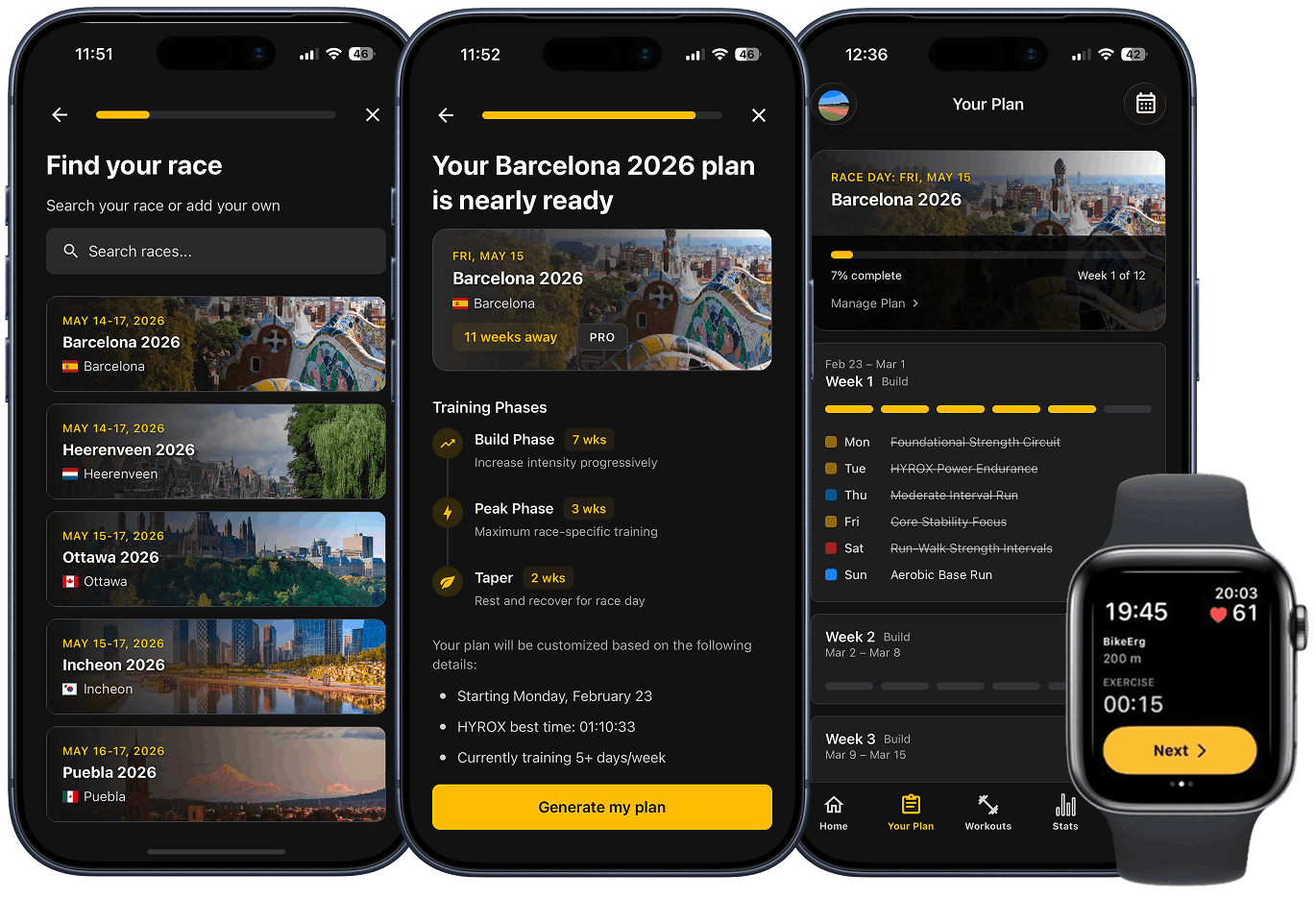
Stop guessing what to do next. TrainRox builds personalized HYROX and hybrid fitness training plans based on your fitness level and race goals.
Get daily workouts, track your progress, and arrive at the start line knowing you've done the right work.


First week free. Cancel anytime.