

How to train for hybrid running events
Tips to mix running and strength effectively for HYROX and other hybrid events.
Conquer the Hybrid: Your Comprehensive Guide to Training for Hybrid Running Events
The world of fitness is constantly evolving, and hybrid events like HYROX, Battle of the Beasts, and similar competitions are leading the charge. These demanding races combine functional strength exercises with challenging running segments, testing not just your cardiovascular endurance but also your brute strength and mental fortitude. If you're an intermediate runner, aged 20-55, looking to diversify your training and conquer these exciting new challenges, this guide is your roadmap. We’ll delve into how to effectively blend running and strength training to optimize your performance and adapt better to the unique demands of hybrid events.
Understanding the Hybrid Challenge: More Than Just a Race
At its core, hybrid event training is about building a well-rounded athlete. You’re not just a runner, and you’re not just a weightlifter. You’re a combination of both, requiring specific adaptations in both your aerobic and anaerobic systems, as well as your muscular endurance and power.
HYROX, for example, typically involves 8km of running, interspersed with 8 functional fitness stations. These stations can include exercises like:
- Ski Erg: Targets the posterior chain, upper back, and core.
- Sled Push/Pull: Develops lower body power and core strength.
- Burpee Broad Jumps: A full-body explosive movement that tests conditioning and strength.
- Rowing: Cardiovascular and upper body endurance.
- Farmers Carry: Grip strength, core stability, and overall muscular endurance.
- Sandbag Lunges: Lower body strength and endurance, with an added balance challenge.
- Wall Balls: Full-body power, coordination, and cardiovascular demand.
The key to success lies in the seamless transition between these disciplines. You need to be able to run hard, then immediately engage in a strength-based movement without significant performance degradation. This requires a unique physiological and muscular conditioning.
The Foundation: Building Your Hybrid Training Base
Before diving headfirst into specific hybrid event protocols, it’s crucial to establish a solid foundation. For intermediate athletes, this means ensuring you have a good base of both running fitness and general strength.
Running Foundation:
- Consistent Mileage: Aim for 3-4 runs per week, incorporating a mix of:
- Easy Runs (2-3 times/week): Conversational pace runs to build aerobic capacity and aid recovery.
- Tempo Runs (1 time/week): Sustained effort runs at a pace you can maintain for 20-40 minutes, improving your lactate threshold.
- Long Runs (1 time/week): Gradually increasing the distance of one run to build endurance.
- Focus on Efficiency: Pay attention to your running form. Good posture, relaxed shoulders, and a mid-foot strike can improve efficiency and reduce injury risk. Consider seeking out a running coach or analyzing your gait.
Strength Foundation:
- Full-Body Strength Training (2-3 times/week): Focus on compound movements that mimic the functional demands of hybrid events. Prioritize good form over heavy weight.
- Lower Body: Squats (back squat, front squat), Deadlifts (conventional, Romanian), Lunges (forward, reverse, lateral), Glute Bridges, Calf Raises.
- Upper Body: Push-ups, Pull-ups (assisted if needed), Rows (barbell, dumbbell, cable), Overhead Press, Bench Press.
- Core: Planks (various variations), Russian Twists, Leg Raises, Bird-Dog.
- Progressive Overload: Gradually increase the weight, repetitions, or sets over time to continue challenging your muscles.
- Balance: Ensure you're working opposing muscle groups to prevent imbalances and injuries.
Bridging the Gap: Integrating Running and Strength
This is where the real magic happens. The goal is to create a training stimulus that mimics the demands of a hybrid event, forcing your body to adapt to transitioning between disciplines.
1. Incorporate Strength into Your Running Sessions (The Hybrid Blend):
Run-Strength Intervals: After a warm-up, perform a short running interval followed immediately by a strength exercise. Examples:
- 400m run, followed by 10 Kettlebell Swings. Repeat 4-6 times.
- 800m run, followed by 10 Burpees. Repeat 3-4 times.
- 1-mile run, followed by 15 Wall Balls. Repeat 2-3 times.
- Progression: Gradually increase the running distance, the intensity of the run, or the number of repetitions/weight of the strength exercise. You can also reduce rest periods between the run and the strength exercise.
Circuit Training with Running Elements: Design circuits that include running or dynamic movements that mimic running.
- Example Circuit:
- 200m Sprint
- 10 Squat Jumps
- 15 Kettlebell Swings
- 10 Push-ups
- 200m Jog
- 10 Lunges per leg
- Rest for 1-2 minutes and repeat for 3-5 rounds.
- Example Circuit:
2. Specific Strength Training for Hybrid Events:
Beyond general strength, focus on exercises that directly prepare you for the common hybrid event stations.
- Sled Push/Pull: Invest time in practicing sled pushes and pulls. Start with lighter weights and focus on technique – driving through your legs and maintaining a strong core. Progress to heavier weights and longer distances.
- Farmers Carry: Grip strength is paramount. Use heavy dumbbells or kettlebells and focus on maintaining an upright posture and tight core. Practice carrying for time or distance.
- Sandbag Training: Sandbags are excellent for developing functional strength and core stability. Incorporate sandbag cleans, carries, and lunges into your routine.
- Wall Balls: Practice the full range of motion, focusing on a powerful squat and an explosive throw. Aim for good pacing to build muscular endurance.
- Burpees and Burpee Broad Jumps: These are conditioning killers. Practice them regularly, focusing on efficiency and minimizing wasted energy.
3. Conditioning and Endurance Enhancement:
High-Intensity Interval Training (HIIT): HIIT sessions are crucial for improving your anaerobic capacity, which is vital for short bursts of intense effort during hybrid events.
- Running HIIT: Short, all-out sprints with recovery periods.
- Cross-Training HIIT: Combine exercises like burpees, jump squats, and kettlebell swings with short runs or rowing intervals.
Muscular Endurance Workouts: Focus on higher repetitions (15-25) with moderate weight for exercises that target the specific muscle groups used in hybrid events. This will help your muscles resist fatigue during longer efforts.
Structuring Your Training Week:
A balanced training week is key to avoiding overtraining and promoting consistent progress. Here’s a sample structure for an intermediate athlete, which can be adjusted based on your individual needs and recovery:
- Monday: Strength Training (Focus: Lower Body & Core) + Light Cardio/Mobility
- Tuesday: Run (Tempo Run or Intervals)
- Wednesday: Rest or Active Recovery (Yoga, Foam Rolling)
- Thursday: Run-Strength Hybrid Session (e.g., Run-Kettlebell Swing intervals)
- Friday: Strength Training (Focus: Upper Body & Core) + Light Cardio/Mobility
- Saturday: Long Run or Hybrid Simulation Workout (e.g., a longer run followed by a circuit of hybrid exercises)
- Sunday: Rest or Active Recovery
Key Training Principles for Hybrid Events:
- Progressive Overload: Consistently challenge your body by gradually increasing weight, reps, sets, distance, or intensity.
- Specificity: Train the movements and energy systems that are specific to the hybrid events you’re targeting.
- Periodization: Structure your training into blocks with varying intensity and volume. For example, you might have a strength-focused block, followed by a conditioning-focused block, and then a race-specific block.
- Listen to Your Body: Recovery is as important as training. Pay attention to signs of fatigue and adjust your training accordingly to prevent injuries.
- Nutrition and Hydration: Fuel your body adequately with a balanced diet and stay hydrated throughout the day, especially during and after training.
- Warm-up and Cool-down: Always dedicate time to a thorough warm-up before each session and a cool-down with stretching afterwards.
Adaptation is Key:
The beauty of hybrid event training is that it forces your body to adapt in multifaceted ways. You'll notice improvements in:
- Muscular Endurance: Your muscles will be better at resisting fatigue during sustained efforts.
- Aerobic Capacity: Your cardiovascular system will become more efficient at delivering oxygen to your working muscles.
- Anaerobic Capacity: You'll be better equipped to handle short bursts of high-intensity effort.
- Grip Strength: Essential for carries and many other functional movements.
- Core Strength and Stability: Crucial for transferring power and maintaining form during dynamic exercises.
- Mental Toughness: The ability to push through discomfort and maintain focus is a significant benefit.
Conclusion:
Training for hybrid running events is a rewarding journey that builds a truly comprehensive athlete. By strategically blending running and strength training, focusing on the specific demands of these competitions, and prioritizing intelligent programming, you can unlock your potential and conquer the hybrid challenge. Remember to be patient, consistent, and always listen to your body. With dedication and smart training, you'll be well on your way to crossing that finish line stronger and more capable than ever before. So, lace up your shoes, grab your weights, and embrace the hybrid evolution of fitness!
Related Articles
Heart rate zones for HYROX preparation
Understand how to train using heart rate zones to optimize your HYROX prep.
Should you run outside or on a treadmill?
Pros and cons of treadmill vs outdoor running when training for HYROX.
Running strategy between HYROX stations
Learn how to pace your 1Ks to stay strong across the full HYROX course.
Ready for a structured plan?
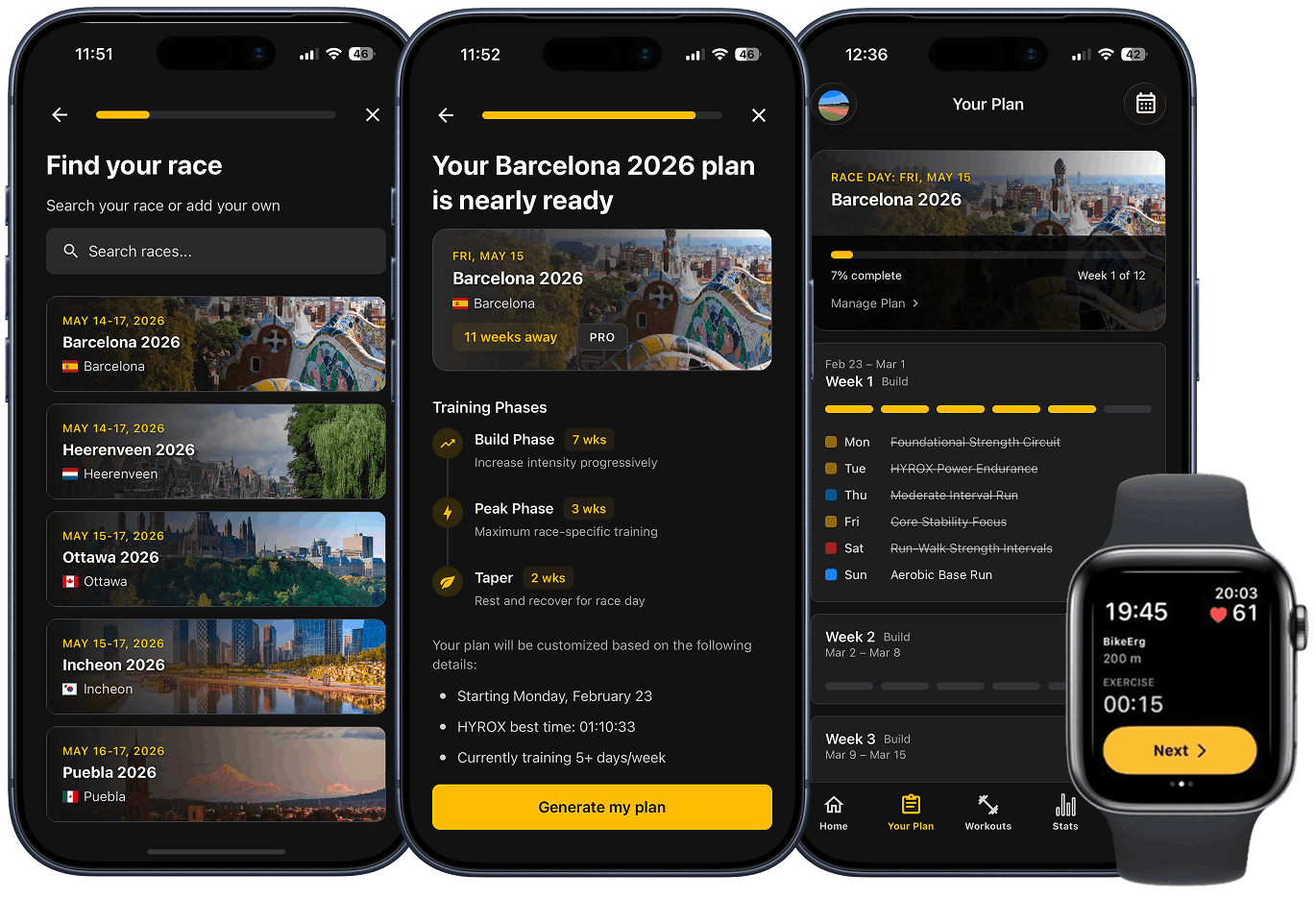
Stop guessing what to do next. TrainRox builds personalized HYROX and hybrid fitness training plans based on your fitness level and race goals.
Get daily workouts, track your progress, and arrive at the start line knowing you've done the right work.


First week free. Cancel anytime.