

Should you do back-to-back HYROX events?
Pros, cons, and recovery considerations of racing frequently in HYROX.
The Siren Song of Back-to-Back: Should You Tackle HYROX Twice in a Weekend?
The HYROX circuit is a demanding beast, a fusion of strength and endurance that tests every fiber of your being. For many, the thrill of crossing that finish line, the camaraderie of the community, and the sheer satisfaction of pushing your limits are intoxicating. So, it's no surprise that the question arises: Should you do back-to-back HYROX events? Is it a strategic move to maximize your racing experience, or a recipe for burnout and injury?
As an intermediate HYROX athlete, you're likely past the initial shock of the format, comfortable with the exercises, and looking for ways to improve your performance and get more out of your passion. The allure of two races, two chances to prove your mettle, perhaps in different cities or even different divisions, can be undeniably strong. But before you blindly sign up for that double-header, let's dive deep into the pros, cons, and crucial recovery considerations to help you make an informed and honest decision.
The Allure of the Double: Potential Pros of Back-to-Back HYROX
There are certainly compelling reasons why an athlete might consider tackling two HYROX events in a single weekend.
- Maximizing Your Racing Experience: For those who truly love the HYROX atmosphere, the energy of race day, and the challenge, doing two events can simply mean more of what you enjoy. It's a concentrated dose of competitive fitness that can be incredibly rewarding.
- Time Efficiency & Travel Savings: If you're traveling to a specific region for a HYROX event, and there happens to be another race there the following day, doing both can significantly reduce travel costs and time commitment. This is particularly attractive for those with busy schedules.
- Testing Different Divisions or Strategies: Some athletes might use back-to-back races to experiment. You could do the Open division on Saturday to get a feel for the course and pacing, and then the Doubles division on Sunday with a partner, or vice versa. This allows for valuable learning without the pressure of a single, high-stakes performance.
- Accelerated Learning Curve: While not ideal for optimal performance, racing twice can rapidly expose your weaknesses and areas for improvement. You'll learn how your body responds to fatigue, how to manage nutrition and hydration across multiple efforts, and what pacing strategies are sustainable.
- Mental Fortitude & Resilience: Successfully completing two challenging races in close succession can be a significant boost to your mental toughness. It's a testament to your grit and ability to push through discomfort and fatigue.
- Potential for Improved Performance (in the second race): While counterintuitive, some athletes might find that their body "wakes up" and feels better in the second race after an initial shake-out. This is rare and highly individual, but the physiological adaptation to movement might, for a select few, lead to a slightly better feel in the second outing.
The Double-Edged Sword: Potential Cons of Back-to-Back HYROX
However, the shiny allure of back-to-back racing often masks significant downsides that can lead to detrimental outcomes if not approached with extreme caution.
- Significantly Increased Risk of Injury: This is the most critical concern. Your body, especially your musculoskeletal system, is subjected to immense stress during a HYROX. Repeating this stress with minimal recovery between events dramatically elevates the risk of muscle strains, tears, joint issues, and overuse injuries. Fatigue compromises your form, making you more susceptible to form breakdown and subsequent injury.
- Compromised Performance in Both Races: Unless you are an elite athlete with a highly specialized training and recovery protocol, it's highly probable that your performance in the second race will be significantly diminished compared to if you raced it fresh. Fatigue from the first event will impact your strength, speed, and endurance across all stations. You might not achieve the times you're aiming for, leading to disappointment.
- Dehydration and Nutritional Depletion: Replenishing fluids and electrolytes, and topping up glycogen stores between races, is a monumental task. Even with meticulous planning, it's difficult to fully recover nutritionally and hydration-wise overnight. This can lead to decreased energy levels, impaired cognitive function, and reduced physical output in the second race.
- Mental and Physical Burnout: Pushing your body to its limits twice in a weekend without adequate recovery is a fast track to burnout. This can manifest as extreme fatigue, demotivation, and a loss of enjoyment for the sport. It can take a significant period of rest and recuperation to recover from such an undertaking.
- Reduced Learning and Adaptation: While you might identify weaknesses, the extreme fatigue can also mask underlying issues or prevent proper learning and adaptation. If your form is severely compromised due to exhaustion, you might not be learning correct technique, only reinforcing bad habits.
The Crucial Consideration: Recovery Between Events
The success or failure of a back-to-back HYROX largely hinges on your recovery strategy between races. For an intermediate athlete, this is where most will fall short.
What does "recovery" even mean between HYROX events? It’s not just about resting. It’s about actively aiding your body’s repair processes.
Immediate Post-Race (Saturday):
- Rehydration and Refueling: This is paramount. Immediately start rehydrating with electrolytes. Consume a mix of carbohydrates and protein within 30-60 minutes of finishing to kickstart muscle repair and glycogen replenishment. Think chicken breast and sweet potato, or a protein shake with fruit.
- Light Mobility and Stretching: Gentle dynamic stretching and foam rolling can help alleviate muscle soreness and improve blood flow. Avoid static stretching while muscles are still fatigued.
- Active Recovery: A very light walk or spin on a stationary bike for 10-15 minutes can promote blood flow without adding significant stress.
- Sleep: Prioritize a full night's sleep. This is when the majority of your body's repair and recovery happens. Aim for 7-9 hours.
The Night Before (Saturday Night):
- Nutrition: Focus on easily digestible, nutrient-dense foods. Again, a good balance of complex carbohydrates and lean protein is key. Avoid heavy, greasy meals that can disrupt sleep.
- Hydration: Continue to sip water and electrolyte drinks throughout the evening.
- Mental Preparation: Visualize a successful second race. Try to relax and manage any pre-race anxiety.
Race Day Morning (Sunday):
- Pre-Race Meal: Eat a familiar and easily digestible breakfast 2-3 hours before your race. This should be carbohydrate-focused to provide readily available energy.
- Hydration: Continue consistent hydration leading up to the start.
- Warm-up: A thorough but not overly taxing warm-up is crucial. Focus on dynamic movements that prepare your body for the demands of the race, but don't drain your already depleted energy stores.
The Reality Check: For an intermediate athlete, realistically achieving optimal recovery between two HYROX events is incredibly challenging. Your muscles will still be fatigued, your central nervous system will be taxed, and your energy stores will not be fully replenished.
Practical Tips & Actionable Advice for the Aspiring Double-Racer
If, after weighing the pros and cons, you're still considering the back-to-back challenge, here's how to approach it with a more informed and cautious mindset:
Assess Your Current Training Load and Recovery:
- Honest Self-Assessment: How well do you recover from a single HYROX event currently? If you're still feeling the effects for days, doubling up is likely a very bad idea.
- Training Frequency: Are you already training 4-5 times a week? Adding a second race might push you beyond your body's capacity to adapt.
Choose Your Races Wisely:
- Open vs. Doubles: Consider doing a Doubles event on the second day. This can reduce the individual physical load and allow you to share the effort.
- Pacing: If you're doing two Open events, your goal for the second race should not be peak performance. Focus on completion and learning, rather than setting a personal best.
Prioritize Nutrition and Hydration Above All Else:
- Pre-Race Prep: Start focusing on hydration and nutrition in the week leading up to your races, not just between them.
- Race Fueling: Have your post-race nutrition and hydration plan meticulously laid out. Pack everything you need.
Listen to Your Body – Critically:
- During the First Race: If you feel any unusual twinges or sharp pains, consider pulling out of the second race. It’s not worth long-term injury.
- Between Races: Pay close attention to how you feel. Are you excessively sore? Do you feel mentally drained? If so, err on the side of caution.
Have a "Plan B":
- Be Prepared to Withdraw: It's okay to not start the second race if your body is telling you not to. The goal is to race more, not to get injured and be unable to race at all.
Consider the Purpose:
- Learning vs. Performance: If your primary goal is to learn and experience the HYROX format more, a back-to-back might be suitable. If your goal is to achieve a specific time or ranking, it's generally not recommended.
The Verdict: For Intermediate Athletes, Caution is Key
For the intermediate HYROX athlete, the strong recommendation is to err on the side of caution. The risks of injury and burnout associated with back-to-back events often outweigh the potential benefits. Your focus should be on consistent, intelligent training and strategic race selection that allows for proper recovery and long-term progression.
Instead of pushing for a double-header, consider:
- Focusing on one well-executed HYROX event.
- Utilizing the week between races for active recovery and skill refinement.
- Building a solid base of fitness and resilience that allows you to perform at your best in each individual race.
The HYROX journey is a marathon, not a sprint, and building sustainable progress means respecting your body's recovery needs. While the idea of conquering two races in a weekend is undeniably appealing, the more prudent and ultimately more rewarding path for an intermediate athlete is likely one that prioritizes longevity and enjoyment in this demanding sport.
Related Articles
Taper week before a HYROX event
How to scale back your workouts during race week to arrive fresh and ready.
How to pace each station
A pacing guide for each HYROX station to maximize performance and energy use.
Post-race recovery and analysis
What to do in the hours and days after your race to recover and learn from the experience.
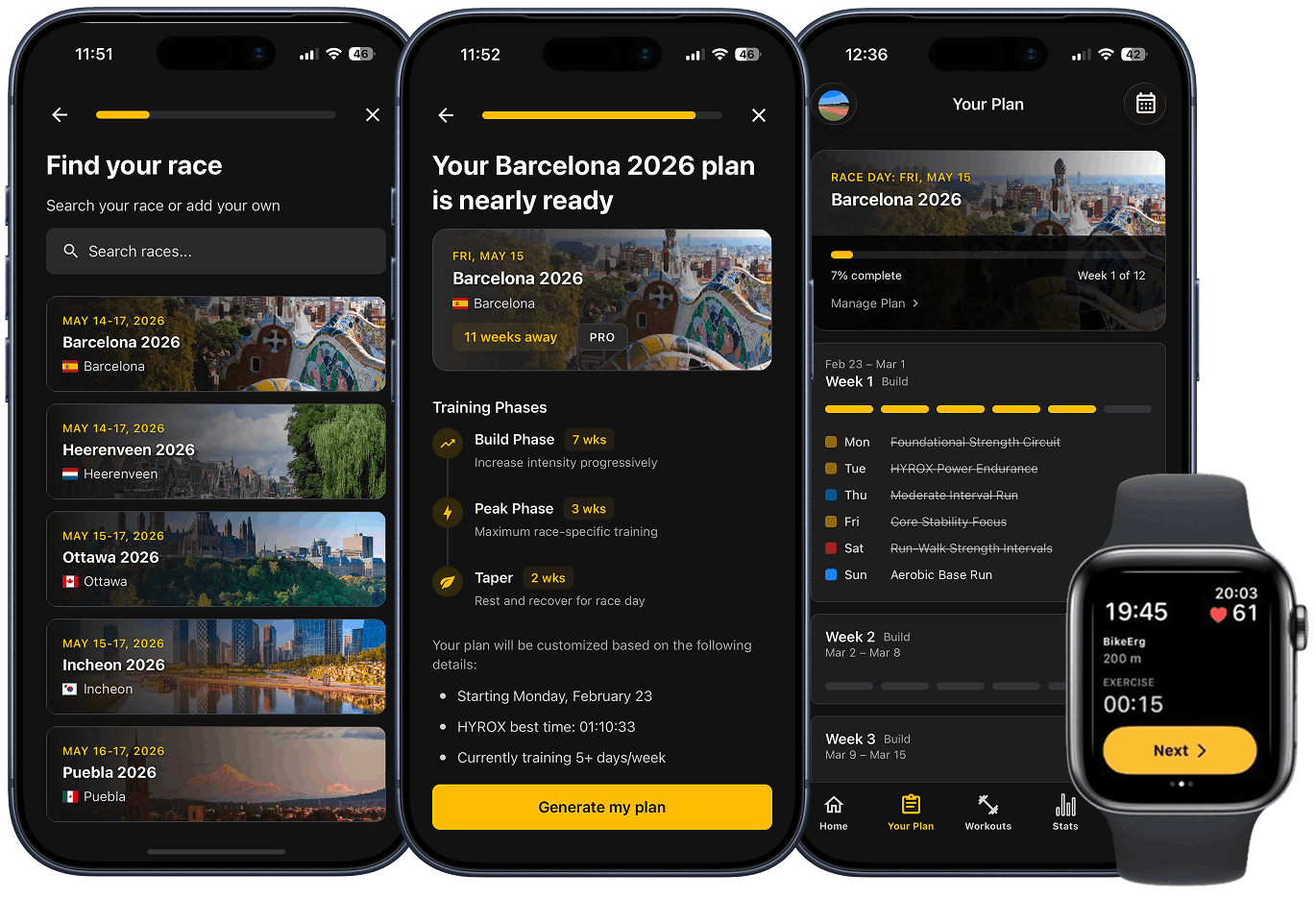
Ready for a structured plan?
Stop guessing what to do next. TrainRox builds personalized HYROX and hybrid fitness training plans based on your fitness level and race goals.
Get daily workouts, track your progress, and arrive at the start line knowing you've done the right work.


First week free. Cancel anytime.