

Mental prep for race day
How to prepare mentally for race day, stay calm, and execute your plan.
Conquer Your Nerves, Unleash Your Best: Your Comprehensive Guide to Race Day Mental Preparation
The alarm clock. It’s the harbinger of the event you’ve trained for, the culmination of sweat, dedication, and countless early mornings. For many, alongside the thrill of competition, a knot of anxiety tightens in the stomach. Race day is more than just a physical test; it’s a mental marathon. But fear not, aspiring champions! This guide is your roadmap to navigating those pre-race jitters, building unshakeable confidence, and executing your strategy with calm precision.
The beauty of mental preparation lies in its accessibility. You don't need fancy equipment or specialized training. All you need is intention, practice, and a willingness to embrace the power of your own mind. Let's delve into how you can transform race day from a source of dread into a stage for your greatest performance.
Understanding the Mental Game: Why It Matters
Think of your mind as the engine of your body. If that engine is sputtering with doubt and anxiety, your physical prowess will be significantly hampered. Conversely, a calm, focused, and confident mind can unlock incredible potential, allowing you to push through barriers you might otherwise believe insurmountable.
Anxiety often stems from a fear of the unknown, the pressure to perform, or the anticipation of pain. These are natural human responses. However, by proactively addressing these feelings and implementing specific mental strategies, you can reframe them from debilitating obstacles into manageable challenges.
Building Your Mental Foundation: The Pre-Race Ritual
The days and weeks leading up to race day are crucial for mental conditioning. This isn't just about physical tapering; it's about mental tapering as well.
Visualize Success: Close your eyes and picture yourself crossing the finish line. See the details: the cheering crowd, the triumphant smile, the feeling of accomplishment. Visualize your entire race day, from waking up to the post-race cooldown. Imagine executing your plan flawlessly, handling any unexpected challenges with grace, and feeling strong and capable throughout. This isn't just daydreaming; it's actively training your brain to anticipate and achieve positive outcomes.
Positive Self-Talk: Your inner dialogue is incredibly powerful. Replace negative thoughts like "I'm not ready" or "I'm going to fail" with affirmative statements such as "I am prepared," "I am strong," and "I can do this." Practice these affirmations regularly, even outside of race-specific contexts. The more you reinforce positive messages, the more they will become your default thinking.
Review Your Training: Remind yourself of the hard work you’ve put in. Look back at your training logs, celebrate your successes, and acknowledge the progress you've made. This concrete evidence of your dedication is a potent confidence booster. You didn't just wake up one day ready to race; you earned this.
Familiarize Yourself with the Course: If possible, reconnoiter the race course beforehand. Understand the terrain, the elevation changes, and key landmarks. This familiarity reduces the element of surprise and allows you to mentally map out your strategy, mile by mile. If you can't visit, study course maps and videos religiously.
Prepare Your Gear: Lay out your race-day outfit, shoes, nutrition, and any other essentials the night before. This simple act eliminates last-minute stress and allows you to focus on your mental state. Knowing everything is ready provides a tangible sense of control.
The Night Before: Securing a Calm Mind
The eve of the race is a critical juncture. While excitement might be high, the goal is to foster a sense of calm readiness.
Establish a Relaxing Routine: Avoid overthinking or cramming in last-minute training. Instead, engage in activities that promote relaxation. This could be reading a book, listening to calming music, taking a warm bath, or spending quiet time with loved ones.
Prioritize Sleep: While it's common to feel a surge of adrenaline that might make sleep elusive, aim for a solid night's rest. If you struggle to fall asleep, don't force it. Get out of bed for a short period, engage in a quiet activity, and then try again. The key is to avoid dwelling on the inability to sleep.
Limit Stimulants: Avoid caffeine and alcohol, as they can disrupt sleep patterns and increase anxiety. Stick to water or herbal teas.
Light Meal: Enjoy a balanced, familiar meal that you know sits well with your stomach. Avoid trying new foods on the eve of a race.
Race Day Morning: The Art of Staying Centered
The morning of the race can be a whirlwind of activity and heightened emotions. Here's how to maintain your composure:
Stick to Your Routine: Wake up at your planned time, eat your pre-planned breakfast, and follow your established pre-race rituals. Consistency breeds confidence.
Arrive Early: Give yourself ample time to get to the venue, find parking, use the restroom, and warm up without feeling rushed. Rushing is a surefire way to amplify anxiety.
Mindful Warm-up: Your warm-up is not just about preparing your muscles; it's also a prime opportunity for mental grounding. Focus on each movement, breathe deeply, and connect with your body. This is your time to feel present and in tune with your physical state.
Controlled Breathing: When you feel your heart rate elevate or anxiety creeping in, practice deep, diaphragmatic breathing. Inhale slowly through your nose, filling your belly, and exhale slowly through your mouth. This simple technique can significantly reduce physiological signs of stress.
Focus on the Present Moment: Avoid dwelling on past races, potential future outcomes, or what others are doing. Concentrate on what you can control: your breathing, your movements, and your immediate surroundings.
During the Race: Executing Your Plan with Poise
The gun has fired, and you're in motion. Now is the time to trust your preparation and execute.
Stick to Your Pace Plan: Resist the urge to go out too fast, caught up in the adrenaline of the start. Remind yourself of the pace you've trained for and that consistency is key. Use your watch or any pre-determined markers to stay on track.
Break it Down: Don't think about the entire race distance at once. Break it down into smaller, manageable segments. Focus on reaching the next aid station, the next mile marker, or the next landmark. This makes the overall task seem less daunting.
Positive Reinforcement: Continue with your positive self-talk. If you encounter a challenging section, acknowledge it, but immediately follow with a statement of encouragement: "This is tough, but I've trained for this," or "Just keep pushing, you're doing great."
Listen to Your Body: While pushing through discomfort is part of racing, it's also important to be aware of your body's signals. If something feels truly wrong, don't ignore it. However, distinguish between discomfort and genuine pain.
Embrace the Experience: Remember why you started this journey. Enjoy the atmosphere, the camaraderie, and the feeling of accomplishment of simply being out there. Sometimes, shifting your focus from pure performance to the overall experience can alleviate pressure.
React to Challenges, Don't Dwell: If something unexpected happens, like a dropped water bottle or a slight stumble, acknowledge it, deal with it efficiently, and then immediately refocus on your plan. Dwelling on mistakes will only derail your momentum.
Post-Race: The Value of Reflection
The finish line is just the beginning of another important mental process: reflection.
Celebrate Your Achievement: Regardless of your finishing time, you completed the race! Take a moment to acknowledge your effort and the journey.
Analyze Your Performance: Once the initial euphoria has settled, review how the race went. What worked well? What could you improve for next time? Be honest but also compassionate. This is a learning process.
Be Kind to Yourself: Not every race will be a personal best. There will be days when you feel strong and days when you struggle. The key is to learn from every experience and carry that knowledge forward.
Mental preparation for race day is an ongoing practice, not a one-time event. By consistently implementing these strategies, you'll build a mental toolkit that will not only help you conquer your race-day nerves but also empower you to perform at your absolute best, time and time again. Trust in your training, trust in yourself, and embrace the incredible journey. You've got this.
Related Articles
Visualization techniques for each HYROX station
Learn how to mentally rehearse each HYROX movement to perform better on race day.
How to stay motivated during long HYROX prep
Motivation strategies to keep you training even when life gets in the way.
The mental side of sleds: How to push through
How to overcome the mental wall that hits during heavy sleds, and keep moving.
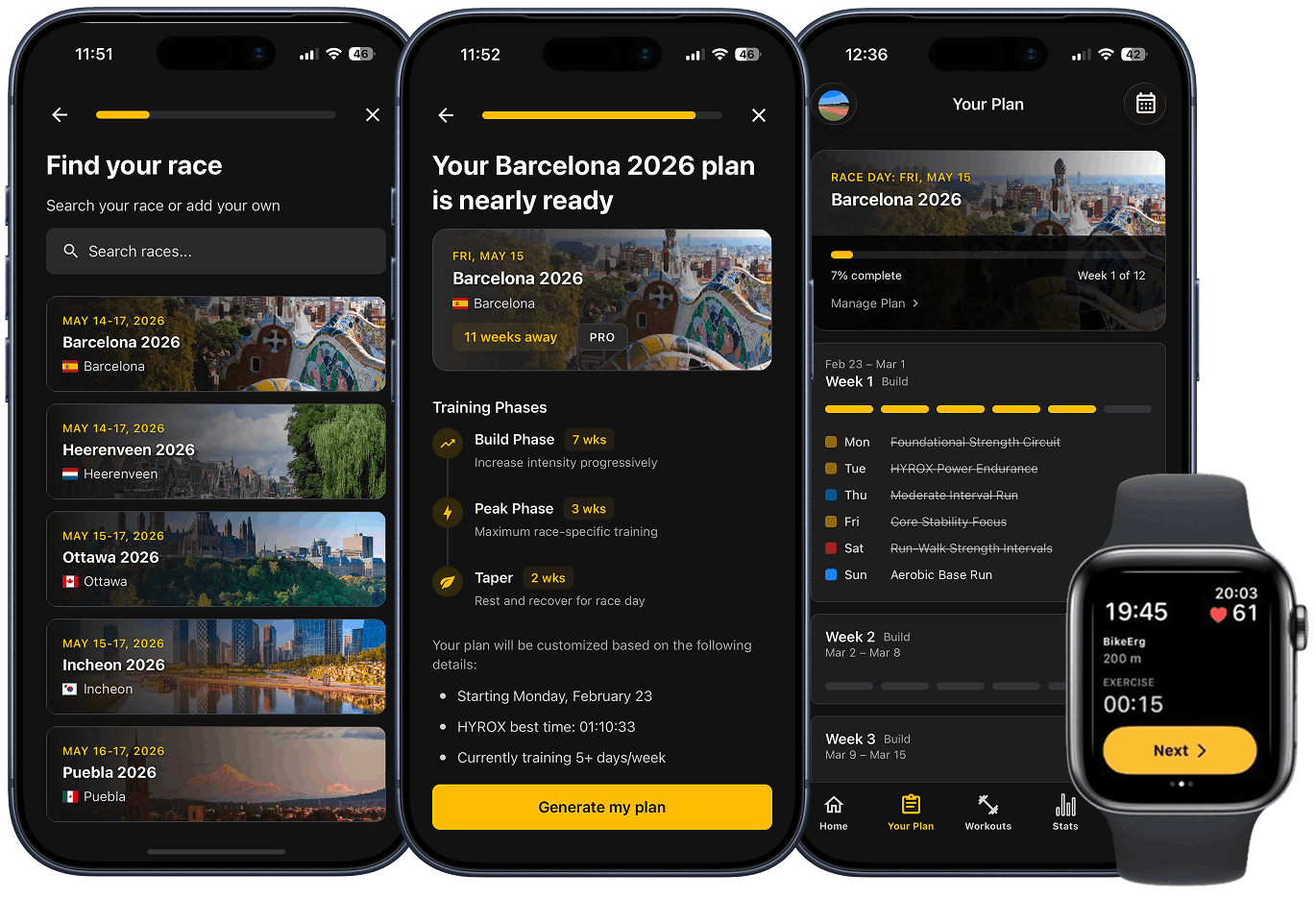
Ready for a structured plan?
Stop guessing what to do next. TrainRox builds personalized HYROX and hybrid fitness training plans based on your fitness level and race goals.
Get daily workouts, track your progress, and arrive at the start line knowing you've done the right work.


First week free. Cancel anytime.