

Intra-race fueling: Do you need it?
Explore whether and how you should fuel during your HYROX race based on your pace and goals.
Intra-Race Fueling for HYROX: Do You Need It? A Scientific and Balanced Approach
The HYROX race, a formidable test of functional fitness combining running and eight distinct functional workout stations, demands not only strategic training but also meticulous preparation on race day. One crucial, yet often debated, aspect of this preparation is intra-race fueling. For the intermediate HYROX athlete, understanding whether and how to fuel during the event can be the difference between a strong finish and hitting a debilitating wall. This article delves into the science behind fueling during a HYROX, exploring individual needs based on pace, goals, and the unique demands of the race.
The Energy Demands of HYROX: A Dual-Sport Challenge
HYROX is inherently demanding. The continuous cycle of running, often at a challenging pace, interspersed with strength-focused stations, places significant strain on your body's energy reserves. The primary fuel sources for this type of exertion are carbohydrates and, to a lesser extent, fats.
- Carbohydrates: Your body stores carbohydrates as glycogen in your muscles and liver. During moderate to high-intensity exercise, glycogen is the preferred and most readily available fuel source. As you progress through the race, these glycogen stores will inevitably deplete.
- Fats: While your body possesses a vast supply of fat, it's a less efficient fuel source at higher intensities. Your body needs to convert fat into usable energy, a process that is slower and requires more oxygen compared to carbohydrate metabolism.
The key question for any HYROX athlete is: how quickly will my glycogen stores be depleted, and will this depletion negatively impact my performance? This is where individual factors come into play.
Who Needs Intra-Race Fueling? The Pace and Goal Equation
The necessity of intra-race fueling is not a one-size-fits-all answer. It hinges on two primary variables: your target pace and your performance goals.
1. Pace as a Primary Indicator:
- Faster Paces (e.g., aiming for a sub-70-minute race): Athletes targeting faster finish times will likely be running at a higher intensity for longer durations. This elevated intensity means your body will be oxidizing carbohydrates at a significantly faster rate. Glycogen depletion can become a limiting factor, leading to fatigue, a drop in power output, and the dreaded "bonk." For these athletes, strategic intra-race fueling is almost certainly beneficial.
- Slower Paces (e.g., aiming for a sub-100-minute race): Athletes running at a more moderate pace will have a greater reliance on fat oxidation, preserving their glycogen stores for longer. While fatigue is still a factor, the rate of glycogen depletion will be slower. For some, particularly those with excellent fueling strategies during training and a robust metabolic engine, intra-race fueling might be less critical, or even unnecessary. However, even at slower paces, the cumulative stress of 10+ stations can significantly tax energy reserves.
2. Goals Beyond Just Finishing:
- Performance Enhancement: If your goal is to achieve a specific time, set a personal best, or maintain a consistent pace throughout the race, fueling can help you push through physiological barriers and avoid performance decrements.
- Consistent Effort: Many HYROX athletes strive for a steady effort across all stations and running segments. Intra-race fueling can contribute to this consistency by preventing significant energy dips.
- Simply Finishing: For those who are newer to HYROX or prioritizing completion over time, the need for fueling might be less pressing. However, it’s still wise to consider the cumulative stress and potential benefits of a small top-up.
The HYROX Factor: Station-Specific Demands
The unique structure of HYROX, with its demanding stations, adds another layer of complexity. These stations, such as the Ski Erg, Sled Push, Sled Pull, Burpee Broad Jumps, Rowing, Farmer's Carry, Sandbag Lunges, and Wall Balls, require bursts of power and sustained muscular effort. Each station taps into your energy stores differently:
- Strength-biased stations (Sled Push, Pull, Farmer's Carry): These can lead to localized muscular fatigue, impacting your ability to run efficiently afterwards. While not directly depleting glycogen, the overall energy expenditure and stress on your system are high.
- Higher-intensity stations (Burpee Broad Jumps, Wall Balls): These involve more explosive movements and can elevate your heart rate and metabolic demand, accelerating glycogen utilization.
The transition between running and these stations, and back again, requires constant adaptation from your body. Fueling can provide the necessary support to maintain your intensity and power output through these transitions.
The Science of Intra-Race Fueling: What, When, and How Much?
If you’ve identified that intra-race fueling is likely beneficial for your HYROX goals, understanding the practicalities is crucial.
What to Fuel With:
The ideal intra-race fuel for HYROX should be:
- Easily Digestible Carbohydrates: These provide a quick source of energy. Examples include:
- Energy Gels: Concentrated carbohydrate sources, typically maltodextrin or a blend of sugars.
- Energy Chews/Blocks: Similar to gels but in a chewable format.
- Sports Drinks: Provide carbohydrates and electrolytes, aiding hydration.
- "Real Food" Options: While more difficult to consume and digest during a race, some athletes opt for small portions of dried fruit or rice cakes if tolerated.
- Electrolytes: HYROX is a long event, and you'll lose electrolytes through sweat. Replenishing them with sports drinks or electrolyte tablets can help prevent cramping and maintain fluid balance.
When to Fuel:
Timing is everything. The goal is to proactively top up your energy stores before you experience significant fatigue or a drop in performance.
- Early Stages (First 20-30 minutes): Many athletes start with their glycogen stores already partially topped up from pre-race nutrition. For those needing fueling, a gel or a few chews around the 20-30 minute mark can be a good starting point.
- Regular Intervals: Aim for a fueling opportunity every 30-45 minutes of racing, depending on your individual tolerance and the intensity.
- Pre-Station Top-Up: Some athletes find it beneficial to consume a small amount of fuel before a particularly demanding station, especially if they anticipate a significant drop in performance.
- Post-Station Refuel: Following a high-intensity station, a quick fuel intake can help your body recover and prepare for the next running segment.
How Much to Fuel:
This is highly individual and depends on your body weight, metabolic rate, and the duration/intensity of the race. A general guideline for endurance athletes is to aim for 30-60 grams of carbohydrates per hour of exercise.
- Start Conservatively: If you’re new to intra-race fueling, begin with the lower end of this spectrum (e.g., one gel or equivalent every 45 minutes).
- Listen to Your Body: Pay close attention to how you feel. If you’re feeling strong and energetic, you might not need as much. If you’re starting to feel sluggish, a slightly larger or more frequent top-up might be warranted.
- Avoid Overtraining Your Gut: Consuming too much too quickly can lead to gastrointestinal distress (bloating, cramps), which can be as detrimental as bonking.
Practical Tips for HYROX Fueling:
- Practice Your Fueling Strategy in Training: This is arguably the most crucial tip. Experiment with different types of fuel, brands, and timings during your long runs and simulated HYROX workouts. This will help you identify what works best for your digestion and performance, and how much your body can handle.
- Plan Your Fuel Placement: HYROX races often have limited personal support. You’ll need to carry your fuel or have it accessible in designated areas. Consider:
- Waist belt or running vest: Ideal for carrying multiple gels or chews.
- Race belt with fuel holders: A popular option for runners.
- Small pockets in your race gear: For very light options.
- Hydrate Consistently: Don't neglect hydration. Drink water and/or electrolyte drinks at aid stations regularly, even if you’re not thirsty.
- Consider the Race Duration: A faster athlete aiming for under 70 minutes might need 1-2 fueling opportunities. An athlete targeting 90-100 minutes might benefit from 2-3.
- Fueling Stations: Be aware of where aid stations are located. If they offer sports drinks or gels, factor this into your plan. However, relying solely on aid station offerings can be risky if you have specific dietary needs or preferences.
- Don't Introduce Anything New on Race Day: This includes fuel types, hydration strategies, or anything that could cause an unexpected reaction.
When Might You NOT Need Intra-Race Fueling?
While we’ve emphasized the benefits for many, there are scenarios where intra-race fueling might be less critical:
- Shorter Race Durations (e.g., HYROX Doubles or potentially a very slow singles race): If your race is likely to be under 60 minutes, and your pre-race nutrition is optimized, you might be able to rely solely on your initial glycogen stores.
- Exceptional Metabolic Efficiency: Some individuals are naturally more efficient at utilizing fat for fuel, even at moderate intensities. This is often a result of consistent training and adaptation.
- Poor Gut Tolerance: If you’ve consistently experienced gastrointestinal issues with sports nutrition during training, forcing yourself to fuel during the race could be counterproductive. In such cases, focusing on excellent pre-race nutrition and hydration might be a better strategy, or exploring highly specialized, easily digestible fuels.
Conclusion: A Personalized Approach is Key
Ultimately, the question of "Do you need intra-race fueling for HYROX?" is answered by your individual physiology, your training, and your race-day ambitions. For the intermediate HYROX athlete aiming to perform at their best, strategic intra-race fueling is often a significant performance enhancer.
By understanding the energy demands of the race, considering your target pace and goals, and experimenting diligently in training, you can develop a fueling strategy that optimizes your performance, helps you sustain your energy, and allows you to race smarter through every running segment and every challenging station. Don't leave your energy reserves to chance; fuel your success in HYROX.
Related Articles
Best recovery meals after a HYROX event
Foods and nutrients to prioritize after a race for optimal recovery.
What to eat before a HYROX race
Simple and effective guidelines for pre-race meals and snacks to optimize energy levels.
Sample meal plan for peak HYROX training
A full day of eating designed to support your strength and conditioning goals.
Ready for a structured plan?
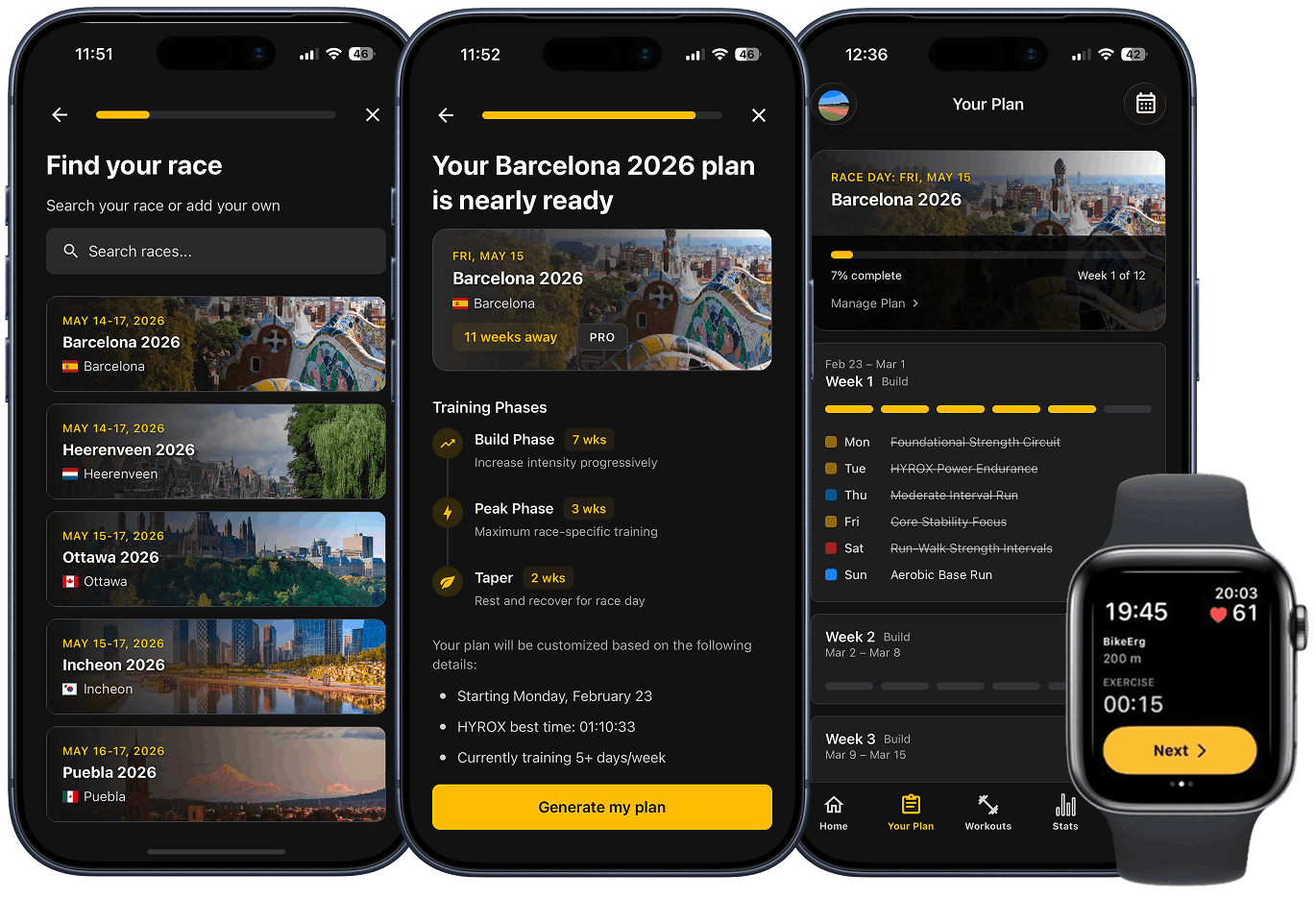
Stop guessing what to do next. TrainRox builds personalized HYROX and hybrid fitness training plans based on your fitness level and race goals.
Get daily workouts, track your progress, and arrive at the start line knowing you've done the right work.


First week free. Cancel anytime.